
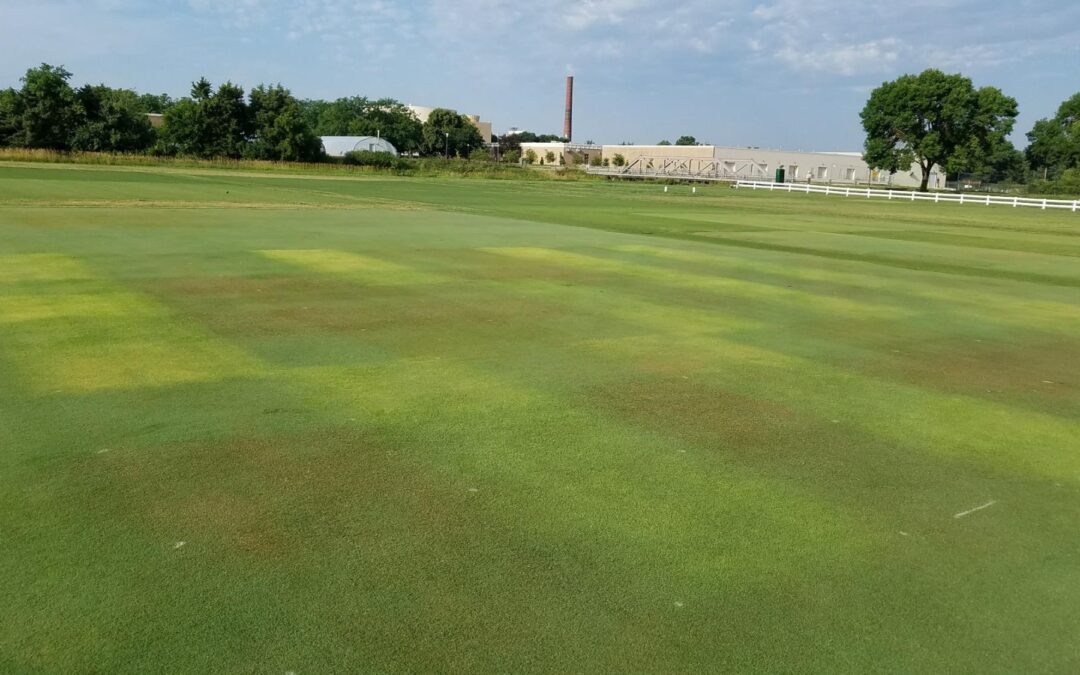
I first learned about growing degree days (GDDs) in my introductory agronomy course at UW–Madison. These models used daily average temperature to predict biological processes such as corn development. I later learned that GDDs could also be used to schedule seedhead and disease suppression applications in turf. In 2007, Doug Soldat and I began advancing this science by developing and validating GDD-based models to predict PGR performance on golf putting greens. Since that initial experiment, we’ve expanded the models across turf species, mowing heights, and PGR plus DMI active ingredients. Most recently, we’ve demonstrated that these models can also predict wetting agent longevity.
Today, GDD totals are widely displayed across turf apps and websites. While many platforms claim to “calculate GDDs” for PGRs and wetting agents, users must understand important details—such as base temperature and reapplication interval—to use those calculators correctly. These values are difficult to memorize and often change depending on mowing height, application rate, and product combinations. The complexity increases further when products are mixed together. Even I log into GreenKeeper to help answer PGR questions that come into my inbox. There is typically more nuance than simply “re-apply at 200 GDD” or “every three weeks at your location.”
A GDD total, by itself, is only a temperature sum. A model is something entirely different.
Calculating GDD Is Easy
From a mathematical standpoint, calculating GDDs is straightforward. Select a temperature scale (°F or °C), calculate the daily mean temperature, subtract the base temperature (where PGR breakdown is minimal), and sum the result over time. Any weather app or turf management website can perform this calculation.
The limitation is not mathematics. It is interpretation and validation.
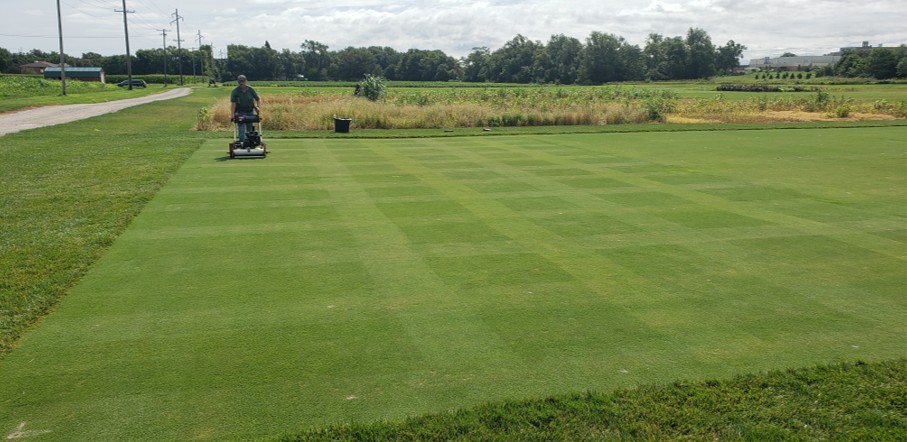
A GDD value only becomes useful when it is calibrated against measured turfgrass response under specific management conditions. For our PGR GDD models alone, we have correlated more than one hundred thousand clipping yield measurements with a range of GDD time points across different application rates, grass species, and mowing heights. That validation allows an interval to reliably predict when regulation weakens, when stacking intensifies, and when reapplication is warranted.
The GDD total is data. Our validated models turn that data into insight.
Decades of Research Validate GreenKeeper’s Models
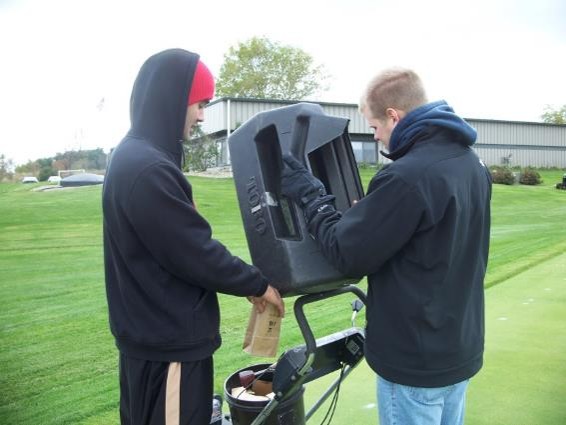
GreenKeeper’s GDD models were developed specifically for turfgrass management through nearly two decades of field research across the United States—from New York to Texas and Nebraska to North Carolina. These models are further validated by GreenKeeper users around the world and continuously refined to reflect real-world performance.
Developing these models required systematic evaluation across active ingredients, application rates, turf species, and mowing heights to define how growth suppression changes over time. The modeling process integrates temperature accumulation with measured plant response, then tests those relationships under varying environmental and management conditions. As new data are collected, the models are refined and expanded—now encompassing more than 850 calibrated product- and rate-specific scenarios.
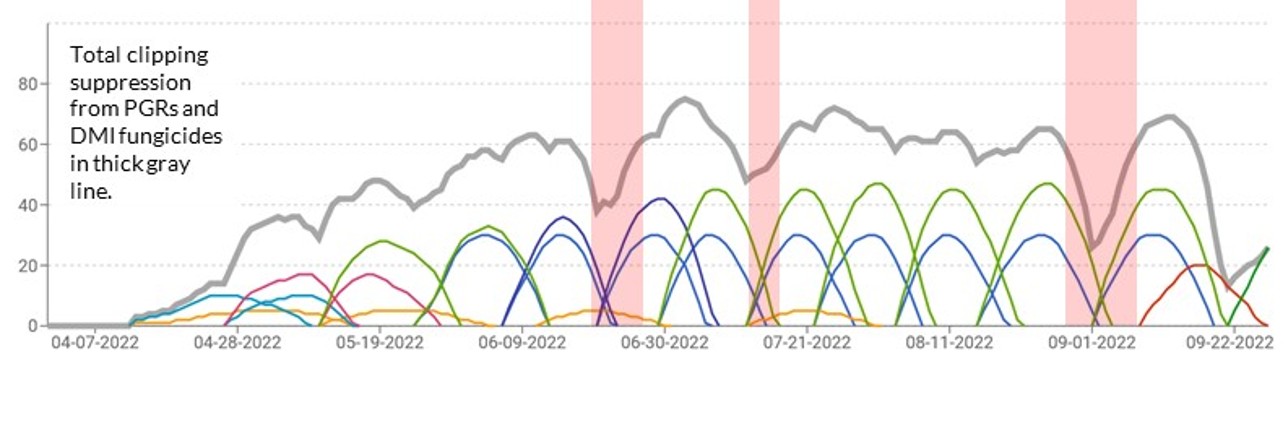
For PGR programs, GreenKeeper’s models allow superintendents to visualize suppression curves, evaluate stacking effects, and project regulation levels into the future rather than relying on static intervals. The same response-based framework extends to wetting agents and integrated PGR/DMI programs where plant growth response remains central.
These models were built within GreenKeeper and continue to evolve there. That sustained research and refinement separates a simple GDD calculator from a decision-support system grounded in turfgrass science.
Local Weather Precision Matters
Model accuracy depends on environmental precision. The GreenKeeper Preferred weather provider uses dozens of global weather models to predict current and future weather locations for clients around the world. While these models are usually pretty good, weather station data continues to be the gold standard for our clients. The GreenKeeper wX Weather Station measures temperature at your facility to more accurately drive GDD and other models within GreenKeeper. The wX data can also be used to indentify and correct forecast bias (i.e. my course is always a few degrees warmer than the forecast value. The GreenKeeper Insight AI assistant used weather correction tools continuously compare observed (wX) and projected temperatures to reduce bias and improve forward-looking GDD accumulation.
Over time, the models become increasingly refined for your specific course conditions—improving both performance projections and reapplication timing confidence.

GreenKeeper App: More Than a GDD Calculator
Calculating GDDs is simple. Translating temperature accumulation into confident, site-specific management decisions is not.
A standalone GDD total provides a number. The validated response models in GreenKeeper provide timing guidance, performance insight, and confidence in scheduling applications.
GreenKeeper is much more than a GDD calculator. It was built to translate temperature data into practical, field-tested models that reflect how PGRs and wetting agents actually perform under real management conditions. Be cautious of apps that simply claim to “calculate GDDs” without validated response models behind them.
If you want more than a temperature total—and real clarity on how your applications are performing at your course—GreenKeeper was built for that purpose.
Put Validated Models to Work At Your COurse
GreenKeeper goes beyond tracking temperature. It predicts how your PGR or wetting agent is performing today and projects when suppression will begin to weaken. Those predictions are automatically tailored to your products, rates, turf species, and mowing heights.
With GreenKeeper, you get:
- Product- and rate-specific calibration
- Species and mowing height adjustments
- Stacking logic across sequential applications
- Forward visualization of suppression curves
- Automated interval tracking tied to application records
- More than 850 validated product- and rate-specific models
When paired with the GreenKeeper wX Weather Station, temperature data is measured at your facility—not a regional airport—and forecast bias is reduced to improve forward-looking GDD projections.
If you want more than a GDD total—and real confidence in your timing decisions—GreenKeeper was built for that purpose.