
GREENKEEPER BLOG

GreenKeeper Models Provide More Insight Than Simple GDD Calculators

​I first learned about growing degree days (GDDs) in my introductory agronomy course at UW–Madison. These models used daily average temperature to predict biological processes such as corn development. I later learned that GDDs could also be used to schedule seedhead...

Upgraded GreenKeeper CIS Includes POGO Integration

Many turf management decisions are inherently spatial—where water is needed, where pests typically occur, and where additional management is required to achieve specific performance goals. Historically, these patterns have been managed through careful observation,...

Learning the Microclimate: GreenKeeper Insight Improves Forecast Accuracy

Accurate weather forecasts are central to irrigation scheduling, spray timing, and stress management, yet most forecasts are built for regions—not individual golf courses or athletic complexes. Terrain, tree cover, elevation, and nearby bodies of water create...

Move Past Yesterday’s ET: The Predictive Advantage of GreenKeeper wX

Agronomic models are only as good as the data they receive. GreenKeeper’s models rely on high-quality, site-specific weather inputs to perform at their best. Adding a wX station dramatically improves the accuracy and resolution of those data. While weather stations...

Invest in Yourself and Staff with GreenKeeper University

Advance your turf management knowledge at your pace with GreenKeeper University. Our team of renowned turfgrass professors, researchers and practitioners have created 18 different online courses to help advance the knowledge of turfgrass managers. Students can enroll...

Seeing Turf Differently: Exploring the GreenKeeper RECON Turf Vision Sensor

Turfgrass managers possess an exceptionally keen eye for detecting turf stress. That can be both a blessing and a curse in late summer. I remember dreading the morning drive to Ager Golf Course after being surprised by disease or drought stress the day before. Even...

Silverado is Championship Ready with GreenKeeper

Silverado Golf Resort is once again in the spotlight as host of the PGA Tour’s ProCore Championship, and this year the course also welcomed the U.S. Ryder Cup team during tournament week. Behind the scenes, Director of Agronomy David Walter and his staff rely on the...

Driving Progress: How the GreenKeeper Team is Advancing Turf Management

Just as turf managers worked tirelessly through another challenging summer, our team at GreenKeeper has also been busy. With the arrival of meteorological fall, it’s a perfect time to reflect on the progress we’ve made together—on the course, on the research plots,...

“Models are Wrong,” Yet Some are Incredibly Useful for Turf Management

All models are wrong, but some are useful. — British Statistician George E. P. BoxThis classic quote largely credited to statistician George Box perfectly sums up the challenge of decision-making in turfgrass management. It captures every superintendent’s daily...

Stop Guessing. Confidently Schedule Irrigation

Each day, turf managers face the critical task of scheduling irrigation to prevent wilt tomorrow—without over-watering tonight. But this decision depends on estimating how much soil moisture will be lost today, how much irrigation will replenish it, and how tomorrow’s...
Don’t Let the Tail Wag the Dog

Don’t Let the Tail Wag the Dog

Many factors influence turfgrass growth rate. Some are beyond the manager's control while others are frequently manipulated through normal management. Environmental factors including the recent weather and soil conditions, turfgrass genetics, traffic levels and even...

read more
Invest in Yourself & Your Staff this Off-Season

Invest in Yourself & Your Staff this Off-Season

Labor shortages continue to be a major threat to the turf management industry. Field managers, golf course superintendents, and LCOs from around the country have struggled to find and retain qualified turfgrass professionals at all levels. Many managers have to...
read more
Moving Beyond PGR GDD Intervals

Moving Beyond PGR GDD Intervals

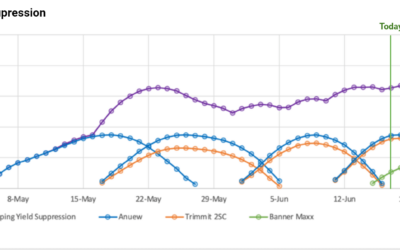
For nearly 15 years, Dr. Doug Soldat and I have been creating growing degree day (GDD) models for plant growth regulators (PGRs) and now DMI fungicides. These sinewave shaped models predict how these routinely applied products affect the relative growth rate of...
read more
Be Careful with Fall Growth Regulation

Be Careful with Fall Growth Regulation

Fall weather is coming, and that should bring changes to your plant growth regulator applications. For over a decade, we've known that PGRs - and even DMI fungicides - produce longer growth suppression during cooler weather. This is why we use growing degree day (GDD)...
read more
Application Summary Aids EOP Planning

Application Summary Aids EOP Planning

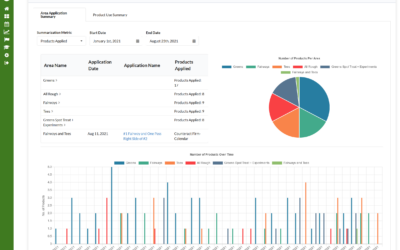
Early fall can be a stressful time of year for golf course superintendents and field managers. Staffing levels start to decline as students head back to school, the summer stress doesn't seem to end, and Early Order Programs for pest control products, wetting agents...
read more
Mixing PGRs can transform your putting greens

Mixing PGRs can transform your putting greens

Doug Soldat and I have been developing PGR growing degree day (GDD) models since 2008. These models have helped turfgrass managers understand how clipping yield - a.k.a. ClipVol - is affected by a single PGR application. They also provide golf course superintendents,...

read more